
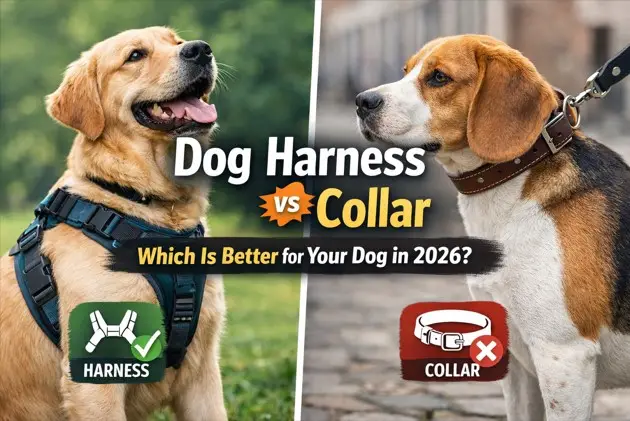
Dog Harness vs Collar is one of those debates that every dog owner runs into sooner or later. You get a new dog, you head to the pet store, and suddenly you are standing in front of a wall of options with no idea what is actually safer, more comfortable, or better for training. The honest answer depends on your dog. But there is a clear winner for most situations, and by the end of this guide, you will know exactly which one to choose and why.
After spending years around dogs of all sizes and temperaments, one thing stands out clearly. Most dog owners default to a collar simply because it is what they grew up seeing. It is familiar, it is cheap, and it is easy. But familiar does not always mean right.
This guide breaks down both options honestly. No fluff, no filler. Just practical, experience-backed advice that helps you make the best call for your specific dog.
Why the Debate Between Dog Harness vs Collar Still Matters
At first glance, this seems like a simple question. But the stakes are higher than most people realize. The wrong choice, especially for certain breeds or dogs with specific health conditions, can lead to tracheal damage, spinal injuries, or behavioral problems that take months to undo.
The collar vs harness for walking debate has intensified in recent years as more veterinarians and certified trainers have started speaking out about the long-term effects of neck pressure on dogs. Studies on canine physiology have shown that repeated leash jerks on a collar can cause micro-injuries to the trachea and cervical vertebrae, even in otherwise healthy dogs.
That is not meant to scare you. It is meant to make sure you take this decision seriously.
What Is a Dog Collar and When Is It Appropriate
A dog collar fits around your dog’s neck and is typically used to hold ID tags and attach a leash. The flat buckle collar is the most common type, and for a calm, well-trained adult dog that walks loosely without pulling, it is perfectly adequate for short walks.
The key phrase there is “calm, well-trained adult dog that walks loosely.” That description does not apply to most dogs, especially not puppies, pullers, or any breed prone to respiratory issues.
When a collar is a reasonable choice
- Your dog is an adult with solid leash manners and rarely pulls
- You need somewhere to attach ID tags at all times
- You are taking short, low-intensity walks with a calm dog
- Your dog has a long neck with no tracheal or spinal history
Important Note
A collar should never be used as the primary leash attachment for a dog that pulls, lunges, or has any history of tracheal issues. The pressure concentrated on the throat is significant, and the damage often builds invisibly over time before it becomes a serious problem.
What Is a Dog Harness and Why So Many Vets Recommend It
A dog harness wraps around your dog’s chest and ribcage, distributing leash pressure across a much larger surface area. Instead of force hitting one point on the throat, it spreads across the torso. That single difference makes a significant impact on dog safety.
There are several types of harnesses worth knowing about before you buy:
- Back-clip harness: The leash attaches between the shoulder blades. Comfortable and easy to use, but does not discourage pulling in strong dogs.
- Front-clip no-pull harness: The leash attaches at the chest. When your dog pulls forward, the design turns their body back toward you. This is the most effective tool for dogs that pull on walks.
- Dual-clip harness: Has both front and back attachment points. Great for training and transitioning between modes depending on how the walk is going.
- Step-in harness: Your dog steps into two loops that you clip at the back. Fast and simple, particularly good for dogs that dislike things going over their heads.
- Vest harness: A padded, full-coverage design that feels more like a jacket. Often preferred for small breeds and anxious dogs that need extra comfort and security.
The puppy harness category has also grown significantly, with brands now designing specifically for young dogs whose necks and shoulders are still developing. If you have a puppy, this is the category to start with.
Dog Harness Pros and Cons at a Glance

Harness: Advantages
- Spreads pressure across chest and torso
- Safer for dogs that pull or lunge
- Reduces tracheal and spinal injury risk
- Front-clip design actively reduces pulling
- Escape-resistant when properly fitted
- Essential for flat-faced and small breeds
- Ideal for puppies during leash training
- Better control over large, reactive dogs
Harness: Disadvantages
- Takes longer to put on than a collar
- Can cause chafing if poorly fitted
- Some designs restrict shoulder movement
- Should not be worn all day at home
- Costs more than a basic flat collar
- Needs regular fit checks as dog grows
- Back-clip style can reinforce pulling
Dog Collar Pros and Cons at a Glance
Collar: Advantages
- Simple and quick to put on
- Perfect for holding ID and registration tags
- Comfortable for all-day passive wear
- Fine for well-trained dogs that do not pull
- Wide range of styles at low price points
- Lightweight and low-maintenance
Collar: Disadvantages
- Concentrates pressure directly on the throat
- Risk of tracheal damage in pullers
- Dangerous for flat-faced breeds
- Dogs can back out of a loose collar
- No training benefit for dogs that pull
- Neck injury risk if dog lunges suddenly
Comparison: Dog Harness vs Collar
| Situation | Harness | Collar |
|---|---|---|
| Dog that pulls on leash | Front-clip harness redirects pulling without neck strain Better choice | Causes throat pressure with every pull — not recommended |
| Puppy under 12 months | Specifically designed puppy harnesses protect developing neck muscles Better choice | Too much risk to a developing trachea |
| Flat-faced breeds (Pug, Frenchie) | Essential — any neck pressure worsens breathing difficulty Better choice | Should not be used for leash attachment in these breeds |
| Holding ID tags | Not ideal — tags can get lost or tangled in straps | The standard and most reliable option Better choice |
| Calm, trained adult dog | Works well — still distributes pressure better | Perfectly adequate if dog walks without pulling Tie |
| Senior dog with arthritis | Reduces strain and allows gentle physical support on walks Better choice | Acceptable if the dog is calm, but adds neck stress |
| Dog training sessions | Dual-clip harness supports training without punishing the neck Better choice | Minimal training utility for dogs still learning |
| Quick bathroom break | Slight overhead — takes a few seconds longer to put on | Faster to clip on for a 2-minute garden visit Better choice |
Breed-Specific Guidance You Actually Need
The harness vs collar question does not have one universal answer because dogs come in wildly different shapes, sizes, and health profiles. Here is what experience and veterinary guidance actually says for the most common situations.
Small dogs and toy breeds
Chihuahuas, Yorkies, Pomeranians, and similar small dogs are at genuinely high risk of tracheal collapse. Their windpipes are narrow, their necks are fragile, and even moderate collar pressure can trigger or accelerate this condition. A lightweight vest harness or padded step-in harness is the right call here. Non-negotiable.
Flat-faced and brachycephalic breeds
If your dog is a Pug, French Bulldog, English Bulldog, Shih Tzu, or Boxer, a harness is not just a preference. It is a health requirement. These dogs already have compromised airways. Adding any restriction around the throat makes breathing harder during exercise, which can escalate quickly in warm weather.
Large and powerful breeds
German Shepherds, Huskies, Labradors, and Rottweilers can generate serious leash tension. A collar gives you very little practical control when a 30-plus kilogram dog decides to chase something across the road. A dual-clip harness with a front attachment dramatically improves your handling and reduces injury risk for both of you. Read our blog best tactical dog harness for German Shepherd.
Greyhounds and sighthounds
Greyhounds have narrow skulls relative to their necks, which means standard collars slip off easily. They need either a wide martingale collar or a sighthound-specific harness designed for their deep, narrow chest. Standard harnesses often do not fit this body shape well, so look specifically for sighthound-labeled options.
Puppies in dog training
A puppy harness is the right starting point for any dog under 12 months. Their neck muscles and cartilage are still developing, and leash corrections or sudden pulls on a collar can cause damage that only shows up later in life. Start with a harness, pair it with positive reinforcement, and build good leash habits from day one.
The Smartest Setup: Using Both a Collar and a Harness
Here is something a lot of first-time dog owners do not know: you do not have to choose one or the other. In fact, using dog harness vs collar is genuinely the most practical and safest approach.
The setup works like this. Your dog wears a flat collar at all times for ID tags. This is your dog’s permanent identification. If they ever get lost, that collar is what connects them back to you. Keep it fitted correctly, meaning you can slide two fingers underneath it comfortably, but it cannot pull over their ears.
Then, whenever you leave the house for a walk, you add the harness and attach the leash to that. The harness does the safety and control work. The collar just holds the tags.
Practical Tip
Hang the harness right next to the leash by the front door. When you reach for the leash, you automatically reach for the harness at the same time. It takes about 15 seconds to clip it on once your dog is used to it, and the safety benefit is worth every one of those seconds.
Remove the harness when you get back home. Leaving a harness on all day can cause pressure points, skin irritation, and matting in longer-coated breeds. The collar stays on. The harness comes off. That is the routine.
How to Know If a Harness Fits Correctly
A harness that fits badly is almost as risky as no harness at all. Chafing, restricted movement, and escape risk all come from poor fit. Here is how to check:
- You should be able to slide two fingers under every strap comfortably, but no more than two
- The front strap should sit below the shoulder joint, not across it
- Your dog should be able to move their front legs freely without the harness riding up
- There should be no skin bunching, rubbing, or redness after a walk
- The harness should not twist or shift position during movement
Check fit every four to six weeks for puppies, since they grow faster than most owners expect. For adult dogs, check at the start of each season, especially if their weight fluctuates.
The No-Pull Harness: Does It Actually Work
The no-pull harness has become one of the most searched terms in dog gear, and for good reason. Pulling on leash is the number one complaint from dog owners on walks. A front-clip harness is the most practical non-aversive tool available for addressing it.
Here is how it works. When your dog pulls forward, the leash attachment at the chest causes the harness to redirect their momentum toward you rather than away from you. Instead of moving forward faster, they get turned around. It does not hurt. It does not scare them. It simply removes the mechanical reward of moving forward when they pull.
The important caveat is that no harness replaces training. A no-pull harness manages the behavior on walks, but it works best when combined with consistent positive reinforcement and proper leash training sessions. Think of it as a support tool, not a magic fix.
For dog training with a pulling dog, start every walk with a few minutes of loose leash practice in a low-distraction area before heading into busier streets. The harness makes that practice safer and more effective.
Final Verdict: Which One Should You Choose
Our Recommendation
For most dogs in 2026, a harness is the right tool for walks. A collar is essential for ID.
If your dog pulls, is a puppy, has a flat face, is small-bodied, or has any neck or respiratory history, a harness is the clear answer for leash walking. There is no real debate in those cases.
If your dog is a calm, fully trained adult who walks loose every time, a flat collar for walks is acceptable. But even then, a harness is never the wrong call. It is always the safer option when a leash is involved.
The practical recommendation is this: use a flat collar for ID tags and a harness for every walk. It is a small habit change that makes a genuine difference to your dog’s long-term health and comfort.
Frequently Asked Questions
Is a harness better than a collar for dogs?
For most dogs, yes. A harness is safer for leash walking because it spreads pressure across the chest instead of concentrating it on the throat. This matters most for puppies, small breeds, flat-faced breeds, and any dog that pulls. A collar is still important for holding ID tags, but it should not be the primary leash attachment point for most dogs.
What is the best no-pull harness for dogs?
A front-clip harness is the most effective no-pull option available without using aversive methods. The leash attachment on the chest redirects your dog’s forward motion back toward you when they pull, which naturally reduces the behavior over time. Pair it with consistent positive reinforcement training for the best results.
Can puppies wear a collar instead of a harness?
Puppies can wear a flat collar for ID tags, but a harness is strongly recommended for all leash walks. Puppy necks, tracheas, and shoulder muscles are still developing and are much more vulnerable to collar-related injury than an adult dog. Start with a purpose-designed puppy harness and build good habits early.
Does a harness stop a dog from pulling?
A front-clip harness significantly reduces pulling by redirecting your dog’s momentum. It does not eliminate pulling on its own, but it makes walks safer and more manageable while you work on training. For best results, use a front-clip harness alongside consistent loose leash training sessions using positive reinforcement.
Should dogs wear a collar and harness at the same time?
Yes, and this is actually the setup most veterinarians recommend. Keep a flat collar on your dog at all times for ID tags, and put the harness on whenever you attach a leash for a walk. Remove the harness when your dog is resting at home to avoid skin irritation and matting. It is a simple two-item routine that covers all the bases.
Quick Verdict:Use a harness for all leash walks. Keep a flat collar on for ID tags. This two-item setup is what most vets recommend and covers your dog completely.