
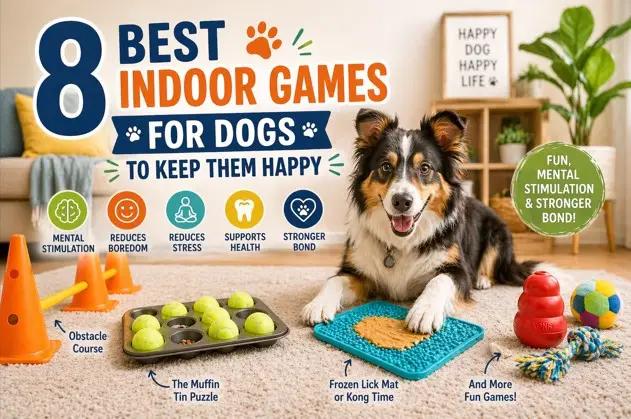
Rainy day? Scorching heat? No nearby park? Your dog still needs to burn energy, and the good news is you don’t even have to step outside. The right indoor games for dogs can be just as fun and satisfying as a walk, sometimes even better.
Dogs are not just active, they are smart too. When they get bored, they start chewing your shoes, barking for no reason, or following you everywhere like a shadow. That’s where indoor games for dogs really help, because they keep your pup both mentally and physically engaged.
Whether you have a hyper Labrador, a stubborn Beagle, or an older Cocker Spaniel who cannot handle intense activity anymore, there is something here for every dog. These indoor games for dogs are designed to match different energy levels and keep your furry friend happy at home. Let’s get into it.
8 Indoor Games for Dogs
1. The Shell Game (Cup Shuffle)

How to play
Place a treat under one of three opaque cups. Shuffle them around slowly on the floor. Ask your dog to sniff out which cup hides the treat. Lift the right cup and reward them big.
Benefits
This is pure mental stimulation for dogs — it sharpens problem-solving skills, builds patience, and taps into their natural scent-tracking instincts.
Pro tip: Start with the treat visible, then slowly add the shuffle as they get the hang of it. Don’t go too fast or they’ll lose interest.
2. Find the Treat (Nose Work at Home)
How to play
Hide small treats around a room — under a cushion, behind a chair leg, near the rug corner. Tell your dog “find it!” and watch them go to work. Start easy and gradually increase difficulty.
Benefits
This is one of the best dog indoor activities for tiring them out mentally. Ten minutes of nose work can equal a 30-minute walk in terms of energy spent.
Pro tip: Use low-calorie treats so you can hide many without overfeeding. Cheerios work surprisingly well.
3. Indoor Fetch (Hallway Edition)
How to play
If you have a hallway, corridor, or open room, roll a soft ball or toy down it for your dog to chase. Use lightweight plush toys instead of hard balls to protect furniture and floors.
Benefits
Burn physical energy without going outside. Great for high-energy dogs like Border Collies or Vizslas who need to run even on off days.
Pro tip: Teach a proper “drop it” command first — or you’ll spend more time chasing your dog than they spend chasing the ball.
4. Tug of War
How to play
Get a sturdy rope toy or tug toy. Offer one end to your dog and let them pull. You control the game — start it, pause it, end it. Always on your terms, not theirs.
Benefits
Tug is one of the most natural games to play with dogs at home. It builds jaw strength, burns energy fast, and actually strengthens your bond when done with rules. This is one of the best indoor games for dogs which make your dog happy.
Pro tip: Contrary to old myths, tug does NOT make your dog aggressive — as long as you teach “drop it” and keep the game structured.
5. Obstacle Course (DIY Living Room)
How to play
Use pillows, chairs, cardboard boxes, and rolled towels to build a simple course. Guideyour dog through it with treats — under the chair, around the box, over the cushion pillow.
Benefits
Combines physical coordination with mental stimulation for dogs. Great for puppies learning body awareness, and older dogs keeping their coordination sharp.
Pro tip: Keep it low and safe — no jumping over tall items. The goal is fun navigation, not agility competition (unless you want it to be).
6. New Trick Training Sessions
How to play
Spend 5–10 minutes teaching a new command — spin, shake hands, play dead, or roll over. Keep sessions short and positive. Always end on a win, even a small one.
Benefits
Training is one of the most underrated indoor games for dogs. It exercises the brain, reinforces good behavior, and gives your dog a sense of accomplishment.
Pro tip: End every session while your dog is still enjoying it — before they get bored or frustrated. Always leave them wanting more.
7. The Muffin Tin Puzzle
How to play
Place treats in some of the cups of a muffin tin, then cover all holes with tennis balls. Your dog has to sniff, paw, and figure out which balls are hiding the reward.
Benefits:
This DIY puzzle game gives dogs the mental workout of a commercial puzzle toy — at zero cost. Perfect for clever breeds like German Shepherds or Poodles who get bored easily.
Pro tip: Supervise always — some dogs try to chew the tennis balls once the game’s over. Remove the tin after playtime.
8. Frozen Lick Mat or Kong Time
How to play
Stuff a Kong or lick mat with peanut butter (xylitol-free), banana, plain yogurt, or wet food. Freeze overnight. Hand it over and let your dog work at it for 20–30 minutes.
Benefits
Licking is a natural calming behavior for dogs. This game is especially helpful for anxious dogs, puppies during alone time, or post-surgery rest recovery periods.
Pro tip: Make a batch of five stuffed Kongs on Sunday and freeze them — you’ll have a week of easy enrichment ready to go.
These are the best indoor games for dogs at home.
Why Indoor Games Matter for Your Dog
It’s easy to feel guilty on a rainy day when your dog hasn’t had a proper walk. But here’s something worth knowing: mental stimulation for dogs can be just as exhausting — in a good way — as physical exercise.
- Reduces anxiety
- Burns energy
- Strengthens bond
- Prevents boredom
Dogs who don’t get enough stimulation develop what trainers call “boredom behaviors” — excessive barking, destructive chewing, and hyperactivity. Indoor games for dogs are not just fun. They’re genuinely important for a happy, balanced dog. Thats why indoor games for dogs matters. Read also our create training blog.
Safety Tips Before You Start
- ✓ Always use dog-safe foods for treat games — avoid grapes, onions, xylitol, chocolate, and macadamia nuts.
- ✓ Supervise puzzle games, especially with chewers who might break apart toys and swallow pieces.
- ✓ Keep sessions short — 5 to 15 minutes is plenty for most games. Quality beats quantity.
- ✓ Clear the play area of fragile items or tripping hazards before starting anything active.
- ✓ Watch for signs of frustration — whining, pawing at you, or walking away. Stop and try again later.
- ✓ For senior or injured dogs, stick to low-impact games like nose work, lick mats, or gentle training sessions.
A Few More Quick Ideas
If you’ve mastered the main eight, here are a few extra dog indoor activities to mix things up:
- Bubble chasing: Dog-safe bubbles from a pet store can keep some dogs entertained for ages.
- Which hand? Hide a treat in one fist and let your dog sniff out the correct hand. Simple, but they love it.
- Stair fetch: If you have stairs, toss a soft toy up them for a great low-impact cardio session.
- Interactive puzzle toys: Nina Ottosson puzzles are widely loved and come in different difficulty levels.
- TV time with dog content: Some dogs genuinely respond to “Dog TV” channels — birds, squirrels, other dogs. Worth a try.
FaQs
Q1. What are the best indoor games for dogs when it’s raining outside?
The best indoor games for dogs on rainy days include nose work (hide and seek with treats), the muffin tin puzzle, frozen Kong time, and tug of war. These keep your dog mentally and physically engaged without needing any outdoor space.
Q2. How long should indoor play sessions be for dogs?
Most dogs do well with 10–15 minute play sessions, 2–3 times a day. Puppies and high-energy breeds may need more frequent sessions, while senior dogs benefit from shorter, gentler activities like lick mats or light training.
Q3. Can indoor games replace daily walks for dogs?
Indoor games can supplement walks but shouldn’t fully replace them long-term. However, on days when going outside isn’t possible, combining mental stimulation games (nose work, puzzles) with physical play (tug, hallway fetch) can absolutely meet your dog’s daily needs.
Q4. What indoor games are best for mental stimulation for dogs?
The top mental stimulation games for dogs include the shell game (cup shuffle), muffin tin puzzles, nose work treat hunts, and short trick training sessions. These activities engage your dog’s brain and can tire them out faster than physical exercise alone.
Q5. Are indoor games suitable for senior dogs?
Yes! Senior dogs especially benefit from low-impact indoor games like lick mats, gentle nose work, and short training refreshers. Avoid high-jump or fast-running games. Mental stimulation is particularly valuable for aging dogs to keep their minds sharp.
Q6. What household items can I use for dog games at home?
You can use muffin tins with tennis balls, cardboard boxes, plastic cups, old towels rolled into tunnels, and chairs arranged as obstacles. Most indoor games for dogs require zero special equipment — just creativity and treats.
Q7. How do I know if my dog is enjoying an indoor game?
A happy, engaged dog will have a relaxed body, wagging tail, focused attention, and will keep coming back for more. Signs of frustration or disinterest include yawning, walking away, whining, or ignoring the game entirely — in which case, switch activities.
Q8. Is tug of war a safe indoor game for dogs?
Yes, tug of war is safe when played with rules. Always use a proper rope or tug toy, teach a “drop it” command, and make sure you control when the game starts and ends. Contrary to old myths, tug does not cause aggression in dogs when played correctly.